 Image 1 of 3
 Image 2 of 3
 Image 3 of 3
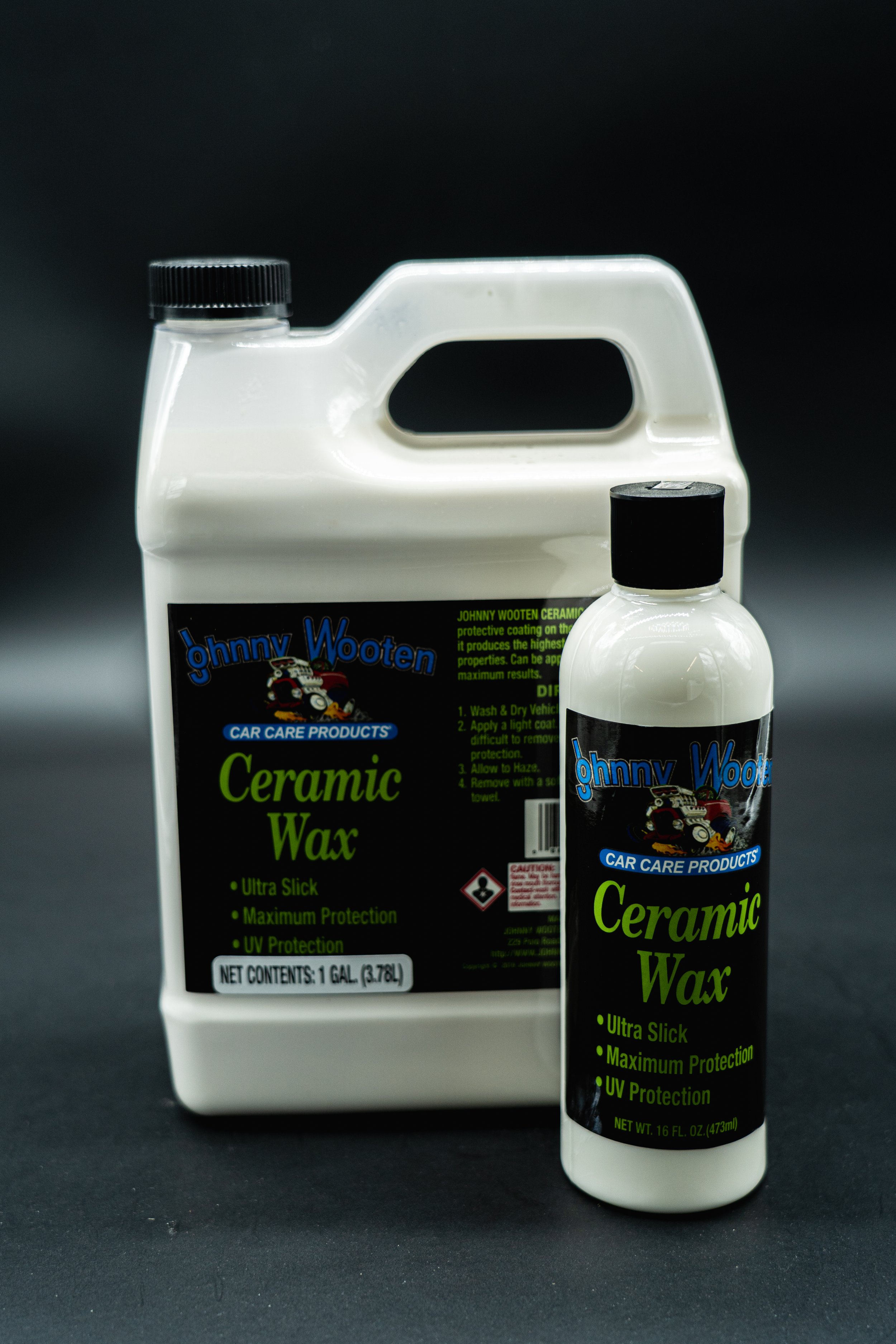
Ceramic wax is a paint-protective product that combines traditional wax polymers with ceramic (silica or silicon dioxide) technology to provide enhanced surface durability, water repellency, and gloss. Unlike pure carnauba waxes, ceramic wax forms a harder, more chemically resistant layer that bonds to the paint’s surface, improving longevity and offering better protection against environmental contaminants, light abrasion, and UV exposure.
Key characteristics:
Durability: Lasts longer than traditional waxes—often several months—depending on application, maintenance, and environmental conditions.
Hydrophobicity: Creates strong water beading and sheeting action, making rinsing and drying easier and helping reduce water spots.
Gloss and depth: Enhances shine and depth of color; results tend to be glossier and more reflective than standard waxes.
Ease of application: Many formulas are designed for simple wipe-on/wipe-off use, although proper surface prep (wash, clay bar, and optional paint correction) improves bonding and longevity.
Chemical resistance: Better resistance to mild acids, road grime, and fallout compared with conventional waxes, though it is not impervious to harsh chemicals or automatic brushes with aggressive brushes/abrasives.
Compatibility: Can be used over sealants and some ceramic coatings, but performance varies—follow manufacturer recommendations for layering products.
Use cases:
Owners seeking an easy-to-apply product that balances enhanced protection with high gloss without committing to professional ceramic coating installation.
Vehicles that see everyday driving and exposure to rain, bird droppings, tree sap, or hard water where extended repellency is desirable.
Seasonal or interim protection between more durable paint coatings.
Limitations:
Not as long-lasting or hard as professional SiO2-based ceramic coatings applied by a trained installer.
Performance depends strongly on surface prep; contaminants or oxidation under the product will reduce effectiveness.
Some formulations can be difficult to remove in high temperatures or leave uneven residues if applied improperly.
Application tips:
Start with a fully clean, cool, and dry surface; remove contaminants with washing and clay barring.
If paint correction is needed, perform it before applying ceramic wax for best visual results.
Apply thin, even coats using applicator pads or microfiber applicators; allow proper dwell time per product instructions, then buff off with a clean microfiber towel.
Reapply periodically per product guidance and after heavy exposure to maintain hydrophobic properties and gloss.
Ceramic wax offers a practical middle ground between traditional wax and professional ceramic coating—delivering noticeable improvements in durability, hydrophobicity, and shine while remaining accessible for DIY application.
Ceramic wax is a paint-protective product that combines traditional wax polymers with ceramic (silica or silicon dioxide) technology to provide enhanced surface durability, water repellency, and gloss. Unlike pure carnauba waxes, ceramic wax forms a harder, more chemically resistant layer that bonds to the paint’s surface, improving longevity and offering better protection against environmental contaminants, light abrasion, and UV exposure.
Key characteristics:
Durability: Lasts longer than traditional waxes—often several months—depending on application, maintenance, and environmental conditions.
Hydrophobicity: Creates strong water beading and sheeting action, making rinsing and drying easier and helping reduce water spots.
Gloss and depth: Enhances shine and depth of color; results tend to be glossier and more reflective than standard waxes.
Ease of application: Many formulas are designed for simple wipe-on/wipe-off use, although proper surface prep (wash, clay bar, and optional paint correction) improves bonding and longevity.
Chemical resistance: Better resistance to mild acids, road grime, and fallout compared with conventional waxes, though it is not impervious to harsh chemicals or automatic brushes with aggressive brushes/abrasives.
Compatibility: Can be used over sealants and some ceramic coatings, but performance varies—follow manufacturer recommendations for layering products.
Use cases:
Owners seeking an easy-to-apply product that balances enhanced protection with high gloss without committing to professional ceramic coating installation.
Vehicles that see everyday driving and exposure to rain, bird droppings, tree sap, or hard water where extended repellency is desirable.
Seasonal or interim protection between more durable paint coatings.
Limitations:
Not as long-lasting or hard as professional SiO2-based ceramic coatings applied by a trained installer.
Performance depends strongly on surface prep; contaminants or oxidation under the product will reduce effectiveness.
Some formulations can be difficult to remove in high temperatures or leave uneven residues if applied improperly.
Application tips:
Start with a fully clean, cool, and dry surface; remove contaminants with washing and clay barring.
If paint correction is needed, perform it before applying ceramic wax for best visual results.
Apply thin, even coats using applicator pads or microfiber applicators; allow proper dwell time per product instructions, then buff off with a clean microfiber towel.
Reapply periodically per product guidance and after heavy exposure to maintain hydrophobic properties and gloss.
Ceramic wax offers a practical middle ground between traditional wax and professional ceramic coating—delivering noticeable improvements in durability, hydrophobicity, and shine while remaining accessible for DIY application.